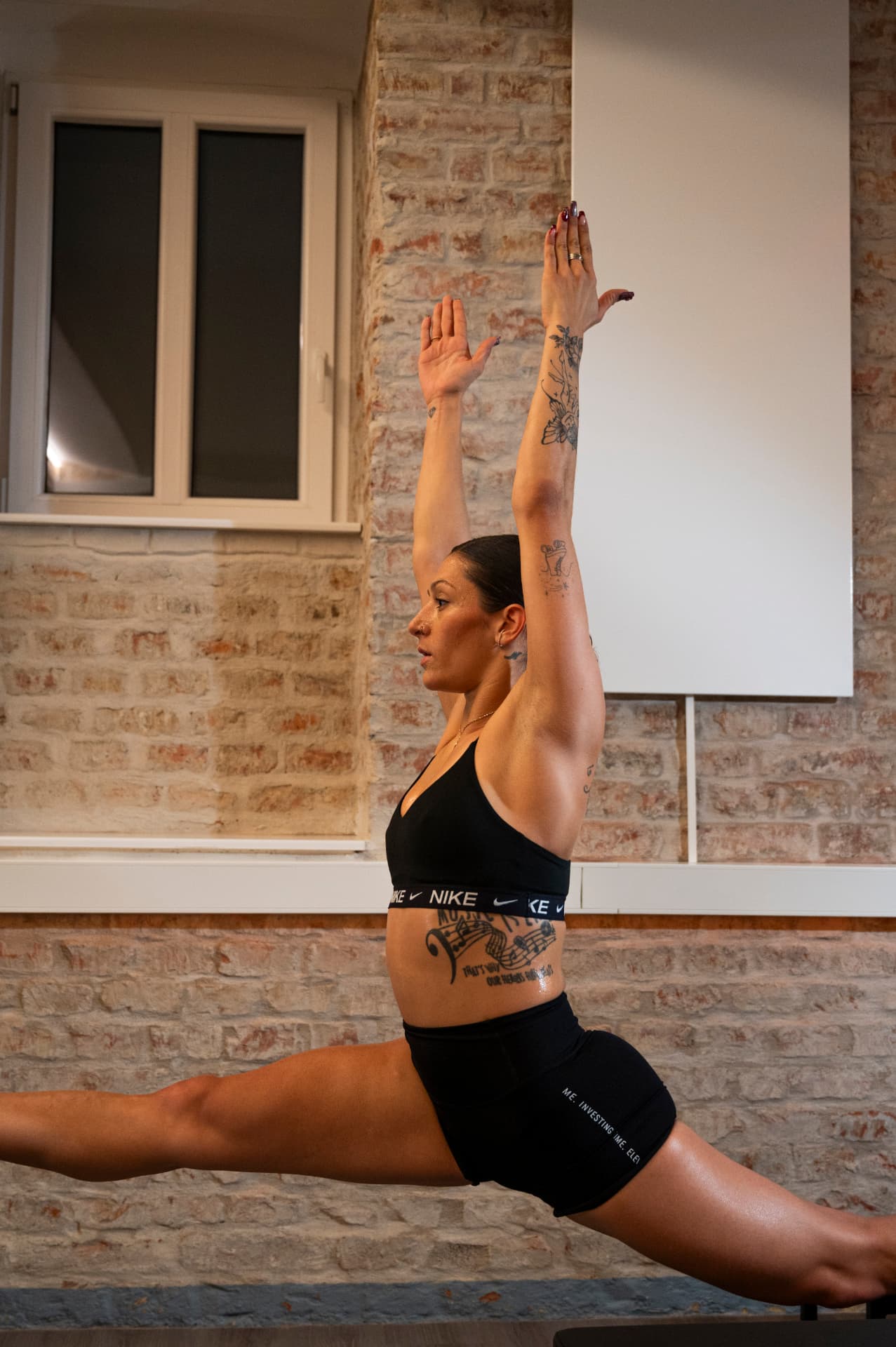
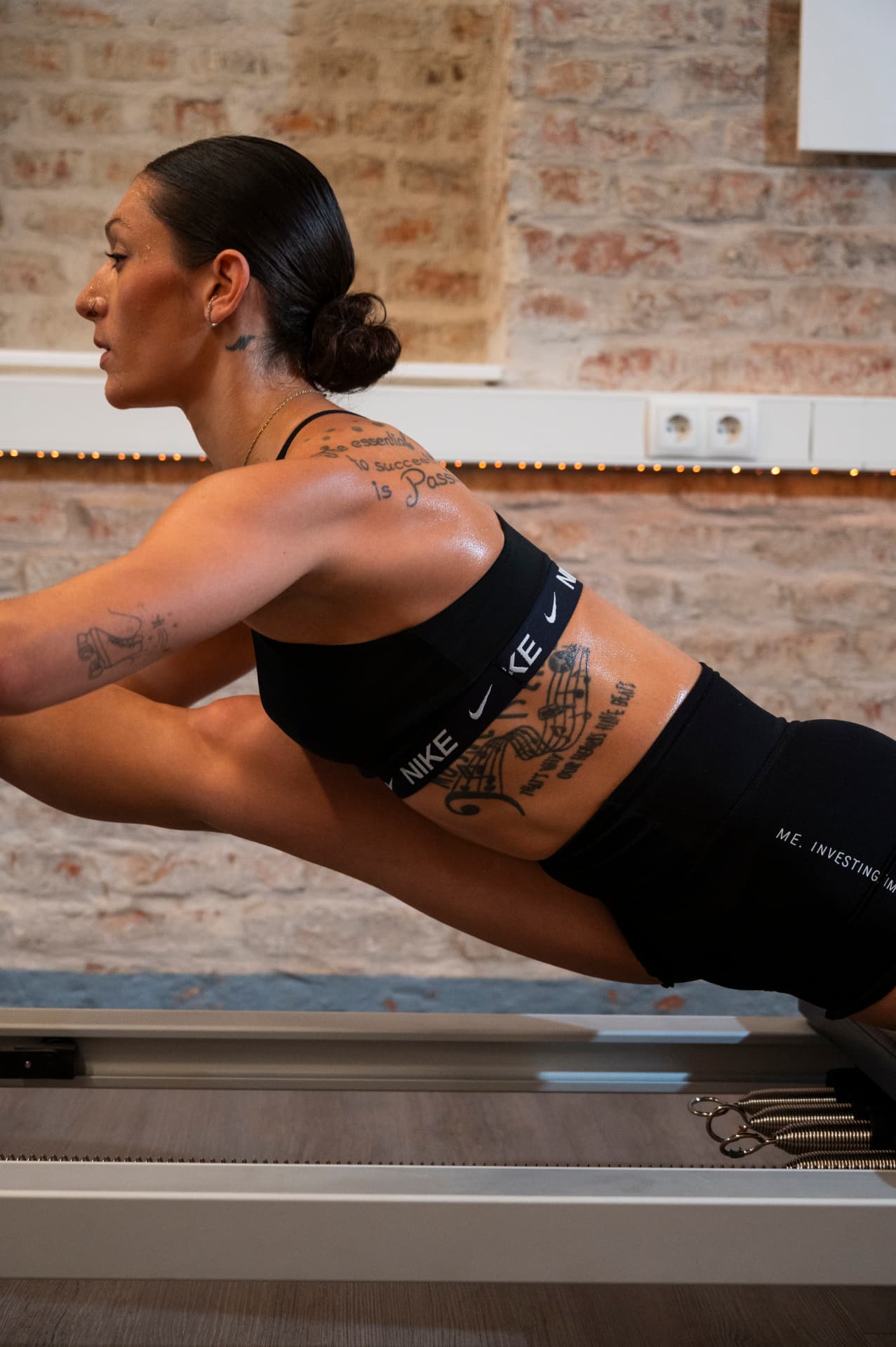
The honest answer: anything from a couple of months to a couple of years. It depends on where you are right now, your current training level, how close you already are to the split and how often you are willing to put in the work. What speeds things up is always the same: consistency, strength, your nervous system — and even hydration plays a role.
[ In short ]
- Consistency beats intensity: four short sessions of around 20 minutes a week bring more than one hour once a week.
- Strength in the end range is what gets you deeper — and lets you hold a split safely, not just on the floor but also standing or upside down.
- Your nervous system and your breath decide how far your body lets you go. Calm breathing helps muscles release instead of tightening up.
How I learned the splits myself
I learned the splits through years of an active lifestyle, practising yoga and dancing. What was harder for me was the middle split. That is where active training, active stretching and building strength in the end range of motion helped me — not only to get into the position, but to hold it. Not just on the floor, but standing and in other positions too.
Over the years, my understanding of flexibility changed: it is a combination of strength, conditioning and consistency. And a very important factor is the nervous system — learning to relax and allow your body to go deeper. The one thing I would do differently today? Train more creatively and see no limits. There are so many ways to explore the split.
What most people overlook
In my classes I see it all the time: most people don't know which muscles they actually need for a split — which ones need to be lengthened and which ones need to be strengthened. They also underestimate how much strength it takes to bring your body into that end range and hold it there.
So we find ways to escape the alignment and cheat a little. But alignment is what keeps the stretch safe and what actually brings you closer to your goal. Stretching out of alignment often means escaping the real training.
The biggest mistakes
Passive stretching can be a good addition — it involves the nervous system and has its own benefits. But on its own it will not give you security or strength in those positions.
- All or nothing: neglecting mobility for months, then doing one very intense session or weekend when the problem is there.
- Only passive stretching: it limits how you can use the position and puts more risk on your body when it is all you do.
Why strength and active flexibility matter
At some point you simply need strength to go deeper into positions like the splits — especially if you want to get creative and do them standing, upside down or any other way than just on the floor.
Strength and especially control protect your body from injury and allow you to explore new positions and new challenges. That is why we don't just sit in a position for ages.
How often and how long should you train?
The most important part is consistency. Stretching four times a week for about 20 minutes is more beneficial than stretching once a week for an hour. A great guideline: five minutes per muscle group per week — this doesn't have to happen in one session, you can split it across your trainings.
Training regularly means faster progress, and you are more likely to stick with it because you actually see that progress. Going back to it only once in a while can be very frustrating — a split is a hard position to reach. Notice how your body feels: if certain muscle groups feel tighter or weaker than others, they might need more attention.
Warm-up, alignment and how intense it should feel
- Always warm up: mobilise the joints and activate the muscles you want to stretch later, to get the blood flowing.
- Watch your alignment so your joints stay protected and safe.
- It should always feel bearable. If you absolutely can't hold the position anymore, you went too far or stayed too long.
- Start easier, stay for a couple of breaths, and when that feels good, go a bit further.
- Breathe: your breath helps you go deeper, shows you how far your body can go and calms your nervous system, so your muscles release instead of tightening up.
My tips if you want to learn the splits
Stay consistent. Learn about your body and understand which muscles need to be lengthened and which need to be strengthened. Learn about alignment.
Build a routine that fits you — alone in your room with music or together with a friend. Find a setting that brings you joy. Include exercises you enjoy and that feel good on your body, as well as the ones that challenge you. That makes it so much easier to stick with it.
Learn the splits at ARI
In our Hips & Splits classes on the reformer we train exactly this: active flexibility, strength in the end range and alignment, with a coach who watches the details. Our Reformer Mobility and Mat Mobility classes build the foundation for it.
Learn the splits with us →A split is not a talent. It is patience, strength and breath. And every centimetre counts.